
Long-Lasting • Cost-Effective • Expert Application • Trusted Results
Old Building Waterproofing
– Problems, Causes & Solutions
Old buildings often develop leakage, damp walls and roof seepage over time.
This guide explains how Old Building Waterproofing works and what you should know before repair.
This article explains everything you should know before repairing an old building leakage problem.

Why Old Building Waterproofing Is Important
As buildings get older, cracks, weak plaster, and worn-out waterproof layers allow rainwater and moisture to enter the structure. This often leads to leakage, damp walls, peeling paint, and gradual structural damage.
Old Building Waterproofing helps stop water seepage at its source, protects walls and slabs, and extends the life of the building while reducing future repair costs.
Common Signs of Waterproofing Failure
If your building has any of these problems, it may need waterproofing:
- Cracks in walls, terrace, or parapet
- Damp patches and peeling paint
- Black spots or fungus on walls
- Hollow sound in plaster
- Leakage near bathrooms and kitchens
- Moisture smell in basement
- Water stains on ceilings
- Falling plaster or ceiling damage
What Happens If You Ignore Water Leakage?
Ignoring leakage can cause serious damage over time, including:
- Weak and damaged plaster
- Rusting of steel reinforcement
- Weak walls and concrete slabs
- Growth of fungus and mould
- Higher repair and maintenance costs
- Reduced life of the building
Early waterproofing is always more affordable than major structural repairs.
Waterproofing Tips- Methods
Learn how different waterproofing methods solve terrace leakage, wall seepage, bathroom leakage, and other common problems.
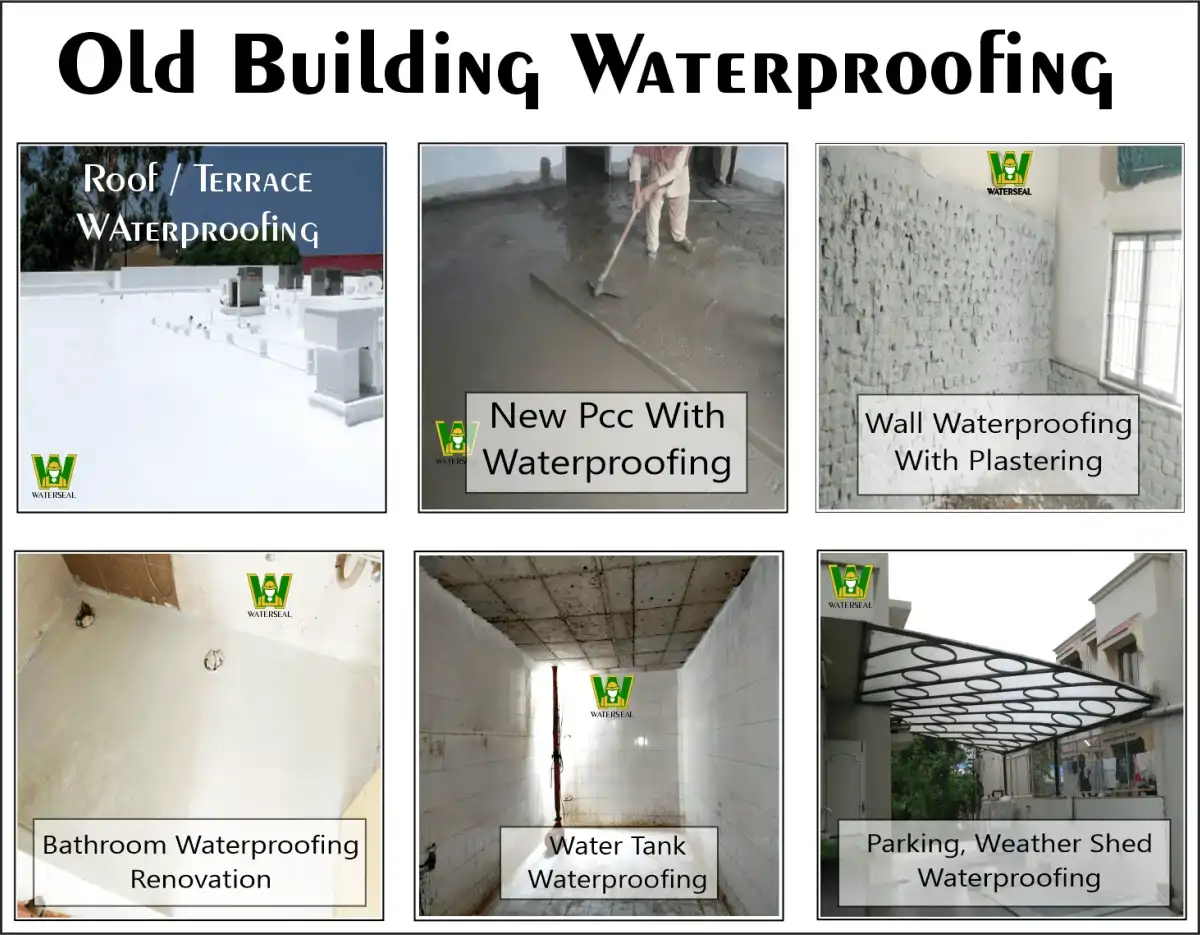
Major Areas That Need Old Building Waterproofing
Water leakage in old buildings usually starts from specific locations.
Understanding these areas helps identify the real source of seepage and choose the correct repair method.
1. Terrace & Roof Waterproofing
The terrace is the most common source of water leakage in old buildings. Cracks and standing water allow water to enter the roof and damage ceilings.
Common Problems:
- Roof water ponding
- Cracks in slab and joints
- Ceiling leakage
- Damaged plaster
2. Water Tank Waterproofing
Old overhead and underground water tanks can develop leaks over time. Proper waterproofing prevents seepage and protects nearby walls.
Common Problems:
- Tank wall leakage
- Damp surrounding walls
- White salt deposits
- Water seepage
3. Bathroom & Kitchen Waterproofing
Bathrooms and kitchens use water every day. Damaged waterproofing causes leakage to nearby walls and lower floors.
Common Problems:
- Bathroom leakage
- Damp kitchen walls
- Tile joint seepage
- Wet patches
4. Exterior Wall Waterproofing
Outside walls face heavy rain and sunlight. Small cracks allow water to enter and damage paint and plaster.
Common Problems:
- Rainwater seepage
- Wall cracks
- Peeling paint
- Fungus growth
5. Basement Waterproofing
Ground moisture enters through foundation walls and basement floors. Waterproofing keeps the area dry and prevents structural damage.
Common Problems:
- Damp basement walls
- Wet floor edges
- Musty smell
- Salt deposits
Benefits of Old Build Waterproofing
Proper waterproofing protects old buildings from water damage and increases the life of the structure. It also reduces future maintenance costs.
Key Benefits:
- Stops water leakage
- Prevents dampness & fungus
- Protects steel from rust
- Increases building life
Explained Waterproofing Process and Methods
Old buildings require a different waterproofing approach than new constructions. Over time, cracks, weak plaster, and moisture reduce the strength of the structure. Simply applying a waterproof coating over the surface does not solve the root cause of leakage.
A successful Building Waterproofing treatment follows a step-by-step process to stop water seepage and provide long-lasting protection.
Step-by-Step Waterproofing Process
1. Surface Preparation
The damaged plaster, loose paint, dust, dirt, and fungus are completely removed. Cleaning the surface allows the waterproofing material to bond properly and perform effectively.
2. Crack Repair
All visible cracks, hairline cracks, and construction joints are repaired using suitable waterproof fillers or sealants. Sealing these cracks prevents water from entering the building.
3. Waterproof Coating Application
After crack repair, multiple coats of waterproofing material are applied to create a protective barrier. Depending on the condition of the building, polymer-modified waterproof coatings such as Polymerized Silicone Vinyl (PSV) systems may be used. These coatings penetrate surface pores, provide excellent adhesion, and form a flexible waterproof membrane that helps resist future leakage.
4. Curing and Drying
The waterproof coating is allowed to cure completely before the surface is exposed to water or regular use. Proper curing improves bonding, durability, and overall waterproofing performance.
5. Protective Top Coat (When Required)
For exposed areas such as terraces and roofs, an additional protective top coat may be applied. This layer improves resistance against sunlight, rain, and weathering, extending the life of the waterproofing system.
Important to Know
Every leakage problem is different. The best waterproofing solution depends on the actual source of water seepage, not just the visible damp area.
In many old buildings, water may enter from the terrace, exterior walls, expansion joints, or hidden cracks, while the damage appears somewhere else inside the building.
A professional inspection helps identify the real leakage source, ensuring the correct waterproofing method is selected. Proper diagnosis and the right repair system provide long-lasting protection and reduce future maintenance costs.
Old Building Waterproofing – FAQs
Why do old buildings face leakage and dampness?
Old buildings develop cracks, weak plaster and porous surfaces due to aging and weather exposure.
Rainwater and moisture enter through these gaps and slowly spread inside walls and slabs.
Proper Waterproofing Processblocks water entry and prevents further structural damage.
How long does old building waterproofing last?
The life depends on surface condition, repair method and exposure to weather.
When the root cause is treated correctly, waterproofing can last many years instead of only one monsoon season.
Can waterproofing be done without removing tiles or plaster?
In minor seepage cases it is possible, but if cracks exist below the surface, removing the damaged layer becomes necessary to stop leakage permanently.
How much does old building waterproofing cost?old building waterproofing cost?
Cost varies depending on leakage source, repair area and treatment type.
Terrace cracks, bathroom seepage and structural dampness all require different solutions.
Is waterproofing necessary for very old buildings (20+ years)?
Yes. Older structures absorb more moisture because materials lose density over time.
Preventive Old Building Waterproofing helps avoid major repair expenses later.